
Cracked grout between paving slabs is a frustrating and all-too-common issue for homeowners. Whether it’s a newly laid patio or one that’s been around for years, you might be wondering: why does my patio grout keep cracking? The answer lies in a combination of poor materials, substandard installation, and natural wear.
In this article, we’ll explore the main reasons why patio grout keeps cracking, and how you can fix it once and for all using innovative products from Joint-It.
1. Traditional Sand and Cement Grouts Are Too Rigid
One of the most frequent reasons patio grout keeps cracking is the use of outdated materials, namely, sand and cement mixes. While widely used, these grouts lack flexibility and durability.
Problems with sand/cement grouts:
Brittle and inflexible: They crack under thermal expansion or ground movement.
Absorb water: Leading to freeze-thaw damage in cold weather.
Poor weed resistance: Weeds grow in cracks, making the issue worse.
Short lifespan: Often crumble or dislodge within months or a couple of years.
If your patio was grouted with a sand and cement mix, it’s possible that this is the root of the problem.

2. The Patio Was Not Installed Securely
Even the best grout can’t compensate for poor foundation work. If your paving slabs were laid on an uneven, unstable, or incorrectly compacted sub-base, movement is inevitable.
Signs your patio isn’t stable:
- Slabs rocking or lifting slightly underfoot
- Wide or irregular joints
- Water pooling in certain areas
When paving stones move even slightly, the rigid grout around them cracks, breaks apart, or falls out entirely. This is a structural issue and must be addressed before re-grouting.
3. Weather and Temperature Fluctuations
Outdoor paving is constantly exposed to the elements. In colder climates, freeze-thaw cycles are a major contributor to grout failure. Water seeps into porous cement-based joints, freezes, expands, and causes them to crack.
In hot climates, the thermal expansion and contraction of stone or concrete can cause rigid grout to break apart over time.
4. Grout Was Applied Incorrectly
Improper mixing, poor application technique, or grouting in the wrong weather conditions can all lead to premature failure.
Common application errors include:
Mixing without following manufacturer’s guidelines
Applying in incorrect weather conditions
Failing to compact grout into joints fully
These mistakes weaken the bond between the grout and the slabs, making it more prone to cracking.

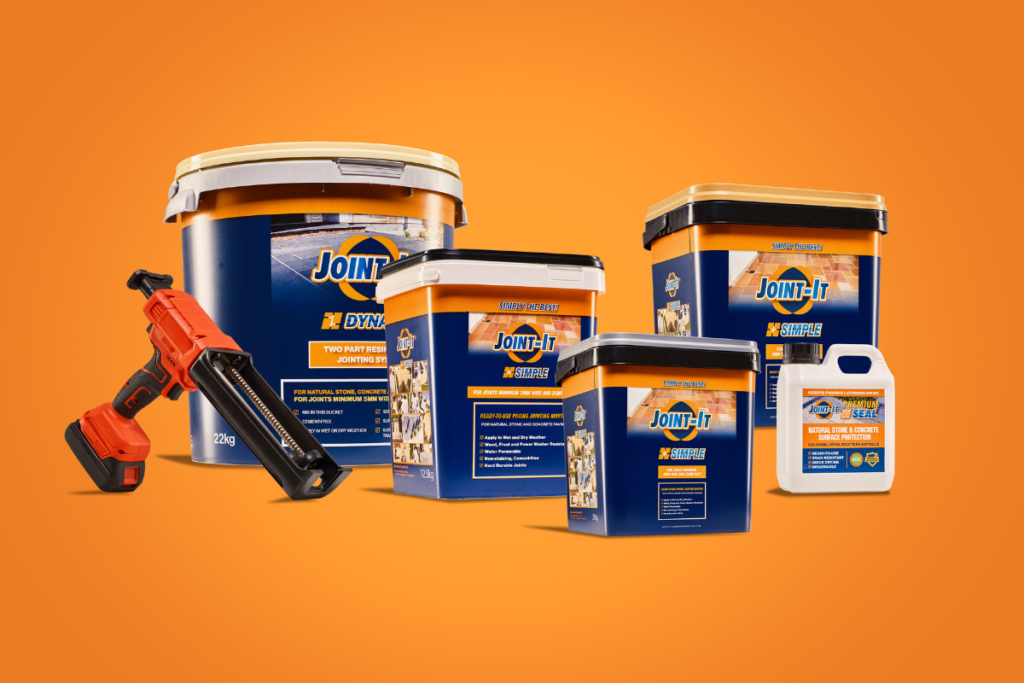
How Joint-It Products Prevent Cracked Patio Grout
If your patio grout keeps cracking, it’s time to upgrade to a smarter solution.
Why choose Joint-It Simple?
Flexible and crack-resistant
Unlike traditional grout, Joint-It Simple is a less rigid paving jointing compound.
Permeable and self-draining
It lets rainwater drain through, reducing freeze-thaw damage and preventing standing water.
Weed and frost resistant
Joint-It Simple forms a durable, water-resistant seal that blocks weed growth and stands up to the elements.
Easy to apply
Brush it into joints with water and watch it harden into a long-lasting, professional finish – no specialist tools or mixing required.
Suitable for all weather
You can apply it in damp conditions, extending your working season.

Fix the Cause, Not Just the Symptoms
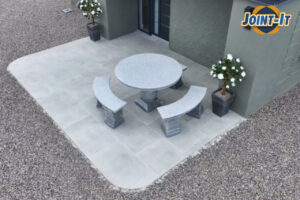
If your patio grout keeps cracking, don’t just patch it up with the same old sand and cement. Address the root causes—like poor materials, unstable installation, and weather damage—and upgrade to a professional-grade product like Joint-It Simple.
Ready to Stop Cracked Patio Grout for Good?
View our full range of jointing compounds and stone care products trusted by landscapers and homeowners across the UK and Ireland. For more information on the differences between jointing solutions, read “Jointing Compound vs. Sand and Cement – Which is Best?”