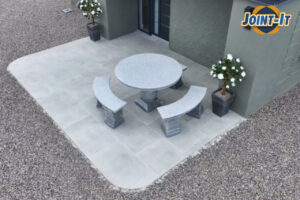
sand and cement patio

When it comes to paving projects in the UK, selecting the right jointing material is crucial for durability, aesthetics, and long-term maintenance. Traditionally, sand and cement have been the go-to option for filling paving joints, but modern jointing compounds are becoming increasingly popular. In this guide, we’ll compare jointing compound vs. sand and cement to help you decide which is best for your project.

What is Jointing Compound?

Jointing compound is a modern alternative to traditional sand and cement for filling the gaps between paving slabs. It is designed to provide a strong, flexible, and weather-resistant finish, reducing the risk of cracking and weed growth. Jointing compounds come in various formulations, including resin-based and brush-in types, making them easy to apply with minimal effort.

when to grout patio | Joint-It patio grout

Benefits of Jointing Compound:

  • Easy Application – No need for complex mixing; simply brush or pour into joints.

  • Weed and Water Resistant – Creates a tight seal, preventing weed growth and water damage.

  • Flexible and Durable – Withstands weather changes without cracking.

  • Low Maintenance – Reduces the need for frequent reapplication or repairs.

  • Quick Drying – Sets faster than traditional sand and cement, allowing for faster project completion.

What is Traditional Sand and Cement?

A sand and cement mix has been used for years as a jointing material for paving. This method involves combining sharp sand with cement and water to create a mortar that is manually applied to the paving joints.

sand and cement patio

Benefits of Sand and Cement:

  • Widely Available – Easily sourced from any builder’s merchant.

  • Strong Bond – Provides a solid, long-lasting joint when applied correctly.

  • Customisable – Can be mixed to different consistencies to suit project requirements.

Key Differences: Jointing Compound vs. Sand and Cement

  • Widely Available – Easily sourced from any builder’s merchant.

  • Strong Bond – Provides a solid, long-lasting joint when applied correctly.

  • Customisable – Can be mixed to different consistencies to suit project requirements.

Feature
Jointing Compound
Sand and Cement
Ease of use
Simple brush-in application
Requires mixing and precise application
Weed Resistance
Prevents weed growth
Allows weed infiltration over time
Durability
Long-lasting and weatherproof
Can deteriorate with time and weather exposure
Maintenance
Low maintenance, no need for frequent repairs
Requires regular upkeep and reapplication
Curing Time
Quick drying
Takes longer to set

Which is Best for UK Paving?

The best choice depends on your specific needs and project type:

  • For patios and driveways: Jointing compound is the better option due to its durability, flexibility, and ease of application.

  • For large-scale commercial projects: Sand and cement may be a cost-effective choice, but it requires more maintenance.

  • For DIY projects: Jointing compound is ideal as it requires less skill and effort compared to mixing and applying sand and cement.

While traditional sand and cement have been used for decades, modern jointing compounds offer a superior, low-maintenance, and long-lasting solution for UK paving. With their ease of use, weather resistance, and prevention of weed growth, jointing compounds are the preferred choice for both homeowners and professionals.

Ready to Upgrade Your Paving?

If you’re looking for a high-quality, easy-to-use jointing compound, check out Joint-It’s premium jointing solutions to enhance your paving today!

For more paving tips and expert advice, read our guide on How to Find the Right Grout for your Outdoor Patio.

Recommended Posts