Why Your Patio Grout Keeps Cracking

Cracked grout between paving slabs is a frustrating and all-too-common issue for homeowners. Whether it’s a newly laid patio or one that’s been around for years, you might be wondering: why does my patio grout keep cracking? The answer lies in a combination of poor materials, substandard installation, and natural wear.

In this article, we’ll explore the main reasons why patio grout keeps cracking, and how you can fix it once and for all using innovative products from Joint-It.

1. Traditional Sand and Cement Grouts Are Too Rigid

One of the most frequent reasons patio grout keeps cracking is the use of outdated materials, namely, sand and cement mixes. While widely used, these grouts lack flexibility and durability.

Problems with sand/cement grouts:

  • Brittle and inflexible: They crack under thermal expansion or ground movement.

  • Absorb water: Leading to freeze-thaw damage in cold weather.

  • Poor weed resistance: Weeds grow in cracks, making the issue worse.

  • Short lifespan: Often crumble or dislodge within months or a couple of years.

If your patio was grouted with a sand and cement mix, it’s possible that this is the root of the problem.

sand and cement patio

2. The Patio Was Not Installed Securely

Even the best grout can’t compensate for poor foundation work. If your paving slabs were laid on an uneven, unstable, or incorrectly compacted sub-base, movement is inevitable.

Signs your patio isn’t stable:

  • Slabs rocking or lifting slightly underfoot
  • Wide or irregular joints
  • Water pooling in certain areas

When paving stones move even slightly, the rigid grout around them cracks, breaks apart, or falls out entirely. This is a structural issue and must be addressed before re-grouting.

3. Weather and Temperature Fluctuations

Outdoor paving is constantly exposed to the elements. In colder climates, freeze-thaw cycles are a major contributor to grout failure. Water seeps into porous cement-based joints, freezes, expands, and causes them to crack.

In hot climates, the thermal expansion and contraction of stone or concrete can cause rigid grout to break apart over time.

4. Grout Was Applied Incorrectly

Improper mixing, poor application technique, or grouting in the wrong weather conditions can all lead to premature failure.

Common application errors include:

  • Mixing without following manufacturer’s guidelines

  • Applying in incorrect weather conditions

  • Failing to compact grout into joints fully

These mistakes weaken the bond between the grout and the slabs, making it more prone to cracking.

when to grout patio | Joint-It patio grout

How Joint-It Products Prevent Cracked Patio Grout

If your patio grout keeps cracking, it’s time to upgrade to a smarter solution.

Why choose Joint-It Simple?

Flexible and crack-resistant

Unlike traditional grout, Joint-It Simple is a less rigid paving jointing compound.

Permeable and self-draining

It lets rainwater drain through, reducing freeze-thaw damage and preventing standing water.

Weed and frost resistant

Joint-It Simple forms a durable, water-resistant seal that blocks weed growth and stands up to the elements.

Easy to apply

Brush it into joints with water and watch it harden into a long-lasting, professional finish – no specialist tools or mixing required.

Suitable for all weather

You can apply it in damp conditions, extending your working season.

stop patio going green Joint-It Simple

Fix the Cause, Not Just the Symptoms

If your patio grout keeps cracking, don’t just patch it up with the same old sand and cement. Address the root causes—like poor materials, unstable installation, and weather damage—and upgrade to a professional-grade product like Joint-It Simple.

Ready to Stop Cracked Patio Grout for Good?

View our full range of jointing compounds and stone care products trusted by landscapers and homeowners across the UK and Ireland. For more information on the differences between jointing solutions, read “Jointing Compound vs. Sand and Cement – Which is Best?”
jointing compounds

The Benefits of Using Paving Sand for Block Paving

Block paving is a popular choice for driveways, patios, and walkways due to its aesthetic appeal, durability, and ease of maintenance. However, one critical but often overlooked component in the longevity and stability of block paving is the paving sand used in the joints between the blocks. Let’s explore the key benefits of using jointing sand, especially polymer-free sands like Joint-It Fine, and why it’s essential for a professional-quality finish.

What Is Paving Sand?

Paving sand, often called jointing sand, is the material used to fill the gaps between paving blocks. Its primary role is to stabilise the structure, prevent weed growth, and support proper drainage.

Traditional paving projects used kiln-dried sand, but today, more advanced products like moisture-activated jointing compounds provide better resistance to the elements and longer-lasting results.

Why Is Paving Sand Important for Block Paving?

Filling the gaps between block paving is not just about aesthetics — it plays a vital structural role. Without a proper jointing solution, blocks can loosen, shift, or become prone to weed growth.

Key Benefits of Using Paving Sand for Block Paving

1. Structural Integrity and Load Distribution

Jointing sand helps interlock the brick paving, distributing weight more evenly and preventing lateral movement. This makes the surface more robust under foot or vehicle traffic.

2. Weed and Pest Resistance

Traditional kiln-dried sand can wash out or get displaced, allowing weeds or insects to take root. High-quality jointing solutions like Joint-It Fine form a firm yet permeable bond that deters weed growth and reduces infestation.

Joint-It Fine has an ultra-fine grain size that packs tightly into narrow joints (1–5mm), minimising weed intrusion naturally, without harsh chemicals.

3. Better Drainage Performance

Proper block paving sand allows water to drain through the joints, reducing pooling and runoff. Products like Joint-It Fine are SUDS-compliant, making them ideal for sustainable urban drainage systems.

4. Low Maintenance and Long-Term Performance

Once installed, high-performance jointing sands require minimal upkeep. They are resistant to erosion from rain, wind, and traffic. This translates to lower long-term maintenance costs and a longer-lasting paved surface.

5. Easy to Apply and Weather-Resistant

Jointing sand is straightforward to install — simply dry, sweep, compact, and wet. Reapplying is just as easy if joints begin to lose material over time. Premium products like Joint-It Fine require less frequent top-ups due to their refined particle size and better joint compaction.

What Is Joint-It Fine?

The innovative binding technology in our paving jointing sand creates a joint that constantly repairs small cracks. Rain swells the 100% raw, organic, natural ingredients in the joint filling sand to consistently repair micro-cracks.

Key Features of Joint-It Fine:

  • Controls Weeds
  • Self-Repair Cracks
  • Stain Resistant
  • Stiffens when Dry
  • Water-Permeable
  • Certified Environmentally Friendly
block paving sand to stop weeds

Quality Sand, Quality Finish

The success of a block paving project depends on the details — and jointing sand is one of the most important. Using high-quality paving sand helps ensure your paved surface stays neat, solid, and weed-free for years to come.

Joint-It Fine offers a professional-grade solution for narrow joints, combining easy application with long-term performance and visual appeal. Whether you’re a homeowner or contractor, it’s a smart upgrade from general-purpose sands, helping your paving look better and last longer.

Buy Joint-It Fine Today

Visit our store locator to find a Joint-It Fine stockist near you. 

What is the Best Pet Safe Jointing Compound?

pet safe jointing compound for patio

If you’re planning to refresh your patio, driveway, or garden path and you share your home with pets, one key question might be on your mind:
Is there a pet safe jointing compound I can use without risking my animal’s health?

The good news is yes — especially when you’re using Joint-It Simple, our eco-conscious jointing solution trusted by landscapers, pet owners, and professionals across the UK and Europe. While many traditional products can contain chemicals or irritants, Joint-It Simple is a natural, pet-safe choice that’s both powerful and environmentally friendly.

Why Choose a Pet Safe Jointing Compound?

Not all jointing compounds are created equal. Traditional options can include cement-based formulas or solvents that may pose risks to pets — especially curious dogs and cats that like to explore new surfaces.

That’s why we formulated Joint-It Simple to be truly pet safe. It delivers outstanding performance without compromising on safety.

What Makes Joint-It Simple Pet-Friendly?

98% Natural Ingredients

Formulated with 98% natural materials, this jointing compound is made for those who want a cleaner, greener approach to paving — without introducing harmful additives or synthetic chemicals into their garden or outdoor space.

Non-Toxic and Eco-Friendly

Joint-It Simple is non-toxic, eco-friendly, and safe for animals. It won’t harm plants, soil, or pets — making it ideal for family homes and pet-friendly gardens.

pet safe jointing compound

Keep Pets Off Until the Compound Cures

While Joint-It Simple is a pet safe jointing compound, we do recommend one simple precaution:
Keep pets off the treated area until the compound has fully cured.

Typical Curing Time: 24–48 Hours

In dry weather, Joint-It Simple cures quickly — often within a day or two. During this period, it’s important to block off the area to prevent pawprints or surface disruption.

Reasons to keep pets off while curing:

  • Avoids tracking compound residue onto fur or paws

  • Prevents uneven setting of the joints

  • Ensures a clean, professional finish

Once cured, the surface is fully safe and ready for daily use — including your pets’ zoomies!


patio maintenance

Final Tips When Using a Pet Safe Jointing Compound

To get the best results for both your paving and your pets:

Plan in advance: Try to apply the jointing compound when pets can stay indoors or in another area for 1–2 days.

Check the weather: Dry, mild days are ideal for fast curing and minimal fuss.

Create a barrier: Temporary fencing or signage can help keep paws away during the drying process.

The Best Pet Safe Jointing Compound

Yes, you can safely use jointing compounds around pets — as long as you choose the right one. With Joint-It Simple, you’re getting a high-quality, pet safe jointing compound that’s eco-friendly, non-toxic, and built to last.

Just allow it time to cure fully, and then you (and your pets!) can enjoy a beautiful, durable outdoor surface with total peace of mind.

Colour Enhancing Stone Sealer vs. Regular Patio Sealers

Colour Enhancer

When it comes to protecting and enhancing natural stone patio surfaces, choosing the right sealer is crucial. Two popular options are colour enhancing stone sealers and regular sealers. But what’s the difference, and which one is best for your needs? In this guide, we’ll explore how each type of sealer works, their benefits, and when to use them.

What Is a Regular Stone Sealer?

A regular stone sealer is designed primarily to protect natural stone from moisture, stains, and damage. It forms an invisible barrier on the surface or within the pores of the stone, preventing water penetration and reducing the risk of staining from spills.

Benefits of Regular Stone Sealers:

  • Protection Against Stains: Prevents oil, water, and dirt from penetrating the stone.

  • Preserves Natural Appearance: Maintains the original look of the stone without altering its color.

  • Durability: Provides long-lasting protection, extending the lifespan of the stone.

  • Weather Resistance: Helps prevent damage from rain, frost, and UV rays.

Regular sealers are ideal for those who want to keep the stone looking exactly as it is while providing a protective layer against daily wear and tear. If this is what you’re looking for Joint-It Premium Seal is the ultimate solution.

What Is a Colour Enhancing Stone Sealer?

A colour enhancing stone sealer does everything a regular sealer does—but with the added benefit of deepening and enriching the stone’s natural colours. It enhances the vibrancy of the stone, making colours more pronounced.

Benefits of a Colour Enhancing Stone Sealer:

  • Enhances Natural Colours: Brings out the depth and richness of the stone’s hues.

  • Provides the Same Protection as Regular Sealers: Shields against moisture, stains, and weather damage.

  • Improves Aesthetic Appeal: Gives a glossy, semi-gloss, or natural matte finish, depending on the product.

  • UV Resistance: Prevents fading from prolonged sun exposure.

These sealers are perfect for those looking to boost the visual appeal of their stone surfaces while also ensuring long-term durability.

Why Choose Joint-It Supreme Colour Enhancer?

For the ultimate in stone protection and enhancement, Joint-It Supreme Colour Enhancer is the perfect choice. This high-quality sealer not only provides superior protection but also significantly enhances the natural colour of your stone.

Key Benefits of Joint-It Supreme Colour Enhancer

  • Intensifies Natural Stone Colour for a richer, more vibrant appearance.

  • Provides Long-Lasting Protection against water, stains, and UV damage.

  • Easy Application with a quick-drying formula that doesn’t leave streaks.

  • Perfect for Outdoor and Indoor Use, ensuring your stone surfaces always look their best.

Whether you have patios, pathways, driveways, or interior stone surfaces, Joint-It Supreme Colour Enhancer is designed to keep them looking stunning while offering unbeatable durability.

patio colour enhancer for stone

When to Use Each Type of Sealer

Choose a Regular Sealer If:

  • You want to keep the stone’s original appearance.

  • You need a strong protective barrier without aesthetic changes.

  • The stone is already vibrant, and no enhancement is required.

Choose a Colour Enhancing Stone Sealer If:

  • You want to enrich the natural colour of the stone.

  • The stone looks dull or faded and needs a visual boost.

  • You prefer a slightly darker finish.

How to Apply a Stone Sealer Effectively

Regardless of which sealer you choose, proper application is key to achieving the best results. Here are some general steps:

  1. Clean the Surface: Ensure the stone is dry and free from dirt, oil, or previous sealers.

  2. Apply Evenly: Use a brush, roller, or sprayer for a uniform coat.

  3. Let It Penetrate: Allow the sealer to absorb into the stone for the recommended time.

  4. Allow to Cure: Follow the manufacturer’s drying time before walking on or exposing the stone to moisture.

applying patio colour enhancer

Which Sealer Is Right for You?

Both regular stone sealers and colour enhancing stone sealers provide excellent protection for natural stone surfaces. The best choice depends on whether you want to maintain the stone’s natural appearance or enhance its colour.

For those seeking the best colour-enhancing protection, Joint-It Supreme Colour Enhancer is the ideal solution. With its advanced formula, it ensures your stone surfaces remain beautiful, durable, and resistant to the elements.

At Joint-It, we offer high-quality stone sealers designed to protect and enhance your outdoor surfaces. For more information on the benefits of sealers, read our guide “Why You Should Use a Patio Sealer: The Key Benefits”

Jointing Compound vs. Sand and Cement: Which is Best?

sand and cement patio

When it comes to paving projects in the UK, selecting the right jointing material is crucial for durability, aesthetics, and long-term maintenance. Traditionally, sand and cement have been the go-to option for filling paving joints, but modern jointing compounds are becoming increasingly popular. In this guide, we’ll compare jointing compound vs. sand and cement to help you decide which is best for your project.

What is Jointing Compound?

Jointing compound is a modern alternative to traditional sand and cement for filling the gaps between paving slabs. It is designed to provide a strong, flexible, and weather-resistant finish, reducing the risk of cracking and weed growth. Jointing compounds come in various formulations, including resin-based and brush-in types, making them easy to apply with minimal effort.

when to grout patio | Joint-It patio grout

Benefits of Jointing Compound:

  • Easy Application – No need for complex mixing; simply brush or pour into joints.

  • Weed and Water Resistant – Creates a tight seal, preventing weed growth and water damage.

  • Flexible and Durable – Withstands weather changes without cracking.

  • Low Maintenance – Reduces the need for frequent reapplication or repairs.

  • Quick Drying – Sets faster than traditional sand and cement, allowing for faster project completion.

What is Traditional Sand and Cement?

A sand and cement mix has been used for years as a jointing material for paving. This method involves combining sharp sand with cement and water to create a mortar that is manually applied to the paving joints.

sand and cement patio

Benefits of Sand and Cement:

  • Widely Available – Easily sourced from any builder’s merchant.

  • Strong Bond – Provides a solid, long-lasting joint when applied correctly.

  • Customisable – Can be mixed to different consistencies to suit project requirements.

Key Differences: Jointing Compound vs. Sand and Cement

  • Widely Available – Easily sourced from any builder’s merchant.

  • Strong Bond – Provides a solid, long-lasting joint when applied correctly.

  • Customisable – Can be mixed to different consistencies to suit project requirements.

Feature
Jointing Compound
Sand and Cement
Ease of use
Simple brush-in application
Requires mixing and precise application
Weed Resistance
Prevents weed growth
Allows weed infiltration over time
Durability
Long-lasting and weatherproof
Can deteriorate with time and weather exposure
Maintenance
Low maintenance, no need for frequent repairs
Requires regular upkeep and reapplication
Curing Time
Quick drying
Takes longer to set

Which is Best for UK Paving?

The best choice depends on your specific needs and project type:

  • For patios and driveways: Jointing compound is the better option due to its durability, flexibility, and ease of application.

  • For large-scale commercial projects: Sand and cement may be a cost-effective choice, but it requires more maintenance.

  • For DIY projects: Jointing compound is ideal as it requires less skill and effort compared to mixing and applying sand and cement.

While traditional sand and cement have been used for decades, modern jointing compounds offer a superior, low-maintenance, and long-lasting solution for UK paving. With their ease of use, weather resistance, and prevention of weed growth, jointing compounds are the preferred choice for both homeowners and professionals.

Ready to Upgrade Your Paving?

If you’re looking for a high-quality, easy-to-use jointing compound, check out Joint-It’s premium jointing solutions to enhance your paving today!

For more paving tips and expert advice, read our guide on How to Find the Right Grout for your Outdoor Patio.

Which Patio Slabs Are Best? A Complete Guide to Choosing the Right Outdoor Paving

which patio slabs are best

Choosing the best patio slabs for your outdoor space is essential to creating a durable, stylish, and low-maintenance patio. With so many materials available, it can be overwhelming to decide which is right for your garden or outdoor area. In this guide, we’ll explore the most popular patio slab options, their benefits, and how to choose the best one for your needs.

Factors to Consider When Choosing Patio Slabs

Before selecting your patio slabs, consider the following key factors:

  • Durability: Can the material withstand weather changes and heavy foot traffic?

  • Maintenance: How easy is it to clean and maintain?

  • Slip Resistance: Is the surface safe, especially when wet?

  • Aesthetic Appeal: Does it complement your outdoor space and home design?

  • Cost: Is it within your budget?

  • Weather Resistance: Will it hold up against freezing temperatures, rain, and sun exposure?

  • Installation Complexity: Some materials require professional installation, while others are DIY-friendly.

Best Types of Patio Slabs

1. Porcelain Patio Slabs

porcelain patio
Pros:
  • Highly durable and resistant to stains, scratches, and weather conditions.

  • Low maintenance and easy to clean.

  • Available in a variety of styles and colours.

  • Non-porous, preventing moss and algae growth.

  • Frost-resistant, making them ideal for colder climates.

Cons:
  • Can be more expensive than other options.

  • Requires professional installation for best results.

2. Natural Stone Patio Slabs

natural stone patio
Pros:
  • Unique and aesthetically pleasing with natural variations.

  • Long-lasting and highly durable.

  • Available in options like sandstone, limestone, and granite.

  • Blends seamlessly into garden landscapes.

  • Enhances property value due to its premium appearance.

Cons:
  • Can be more expensive depending on the type of stone.

  • Some varieties may require sealing to prevent staining.

  • Can be porous, meaning it may absorb moisture and require extra maintenance.

3. Concrete Patio Slabs

Pros:
  • Affordable and widely available.

  • Comes in various finishes, including textured and decorative patterns.

  • Strong and durable for high-traffic areas.

  • Easy to install for DIY enthusiasts.


Cons:
  • Can be prone to cracking over time.

  • Requires sealing and regular maintenance.

  • Colour may fade with prolonged exposure to sunlight.

4. Block Paving Slabs

block paving
Pros:
  • Versatile and available in different shapes and colours.

  • Easy to replace individual blocks if damaged.

  • Slip-resistant surface.

  • Allows for creative and custom patio designs.

Cons:
  • Can be labour-intensive to install.

  • Requires regular maintenance to prevent weed growth between blocks.

  • Can shift over time if not properly installed.

5. Gravel and Resin-Bound Slabs

Pros:
  • Permeable and excellent for drainage.

  • Low-maintenance and visually appealing.

  • Provides a non-slip surface.

  • Ideal for modern and eco-friendly patio designs.

Cons:
  • Gravel may shift and require topping up over time.

  • Resin-bound surfaces can be expensive and need professional installation.

  • Limited in terms of traditional stone aesthetics.

Which Patio Slabs Are Best for Your Needs?

  • If you want luxury and low maintenance, choose porcelain slabs.

  • For a natural and timeless look, go for natural stone.

  • If you need an affordable and durable option, concrete slabs work well.

  • For a unique and customisable design, block paving is a great choice.

  • If you prefer excellent drainage and a modern touch, consider gravel or resin-bound surfaces.

  • For DIY-friendly installation, concrete or gravel are the easiest choices.

  • If you live in an area with harsh winters, porcelain or natural stone may be the best options due to their frost resistance.

natural stone patio Joint-It

Tips for Maintaining Your Patio Slabs

To extend the lifespan of your patio and keep it looking great year-round, consider these maintenance tips:

  • Regular Cleaning: Sweep away debris and wash the surface with mild detergent to prevent staining and algae growth.

  • Sealing (if required): Some materials, like natural stone and concrete, benefit from periodic sealing to enhance durability and protect against moisture.

  • Weed Prevention: Use a high-quality jointing compound like Joint-It to prevent weeds from growing between the slabs.

  • Repair Cracks Promptly: Small cracks in concrete or natural stone should be addressed quickly to prevent larger issues down the line.

The best patio slabs for your outdoor space depend on your personal preferences, budget, and maintenance commitment. Porcelain slabs are excellent for a modern, low-maintenance patio, while natural stone offers a unique and elegant touch. Regardless of your choice, ensure proper installation and maintenance for long-lasting results.

Read here for tips on how to pick the best patio grout colours.


Grout Colours That Make Small Patios Look Bigger and Brighter

When you have a small patio, creating the illusion of more space can feel like a daunting task. However, one of the simplest and most effective ways to enhance your outdoor area is by changing the grout colours. Grout is sometimes an underestimated element, but it plays a vital role in the overall design and can significantly affect how your patio feels.

In this blog, we’ll explore how different grout colours can help make your small patio feel more spacious and bright—without the need (and cost!) for a major renovation.

Use Light-Coloured Grout for an Open, Airy Feel

Psychological Effect:
Lighter grout colours such as light grey or beige can create the illusion of openness and airiness. These shades reflect light and make your patio feel more expansive. They also work well with most tile colours, whether you have natural stone, porcelain, or ceramic tiles.

How It Works:
When light-coloured grout is paired with lighter tiles, it can blur the lines between the tiles and grout, creating a continuous flow. This makes the space appear larger, as there are fewer breaks or harsh transitions in the design.

Tip:
Opt for a grout that’s as light or lighter than your tile colour for a seamless effect. This works especially well with natural stone or large-format tiles, making the space feel like one cohesive, open area.

Choose a Grout Colour That Matches Your Tiles for a Seamless Look

Psychological Effect:
Matching your grout colour to your tiles can help create a smooth, uninterrupted visual flow. The lack of contrast means the eye isn’t drawn to the grout lines, making the patio appear more expansive. This technique also works particularly well in small spaces, where you want to avoid a cluttered or broken-up look.

How It Works:
When your grout and tiles are similar in colour, the visual boundaries between them are softened. This leads to a smoother, more cohesive design that tricks the eye into seeing the space as larger than it is. It also enhances the elegance and simplicity of the design, giving the area a polished, sophisticated appearance.

Tip:
If you’re using large-format tiles, consider a grout colour that’s almost identical to the tile colour. This is especially effective in contemporary or minimalist designs where subtlety is key.

Use Dark Grout Colours for Contrast (With Care)

Psychological Effect:
While dark grout colours like charcoal or black are generally thought to make spaces feel smaller, when used strategically, they can add contrast and definition to a patio, giving it a more “structured” feel. In small spaces, this can be effective in certain situations—especially if you’re working with intricate tile patterns or want to highlight specific design elements.

How It Works:
Dark grout can help accentuate tile patterns and designs, especially with smaller or patterned tiles. When done right, it creates a crisp, clean look that emphasises the tile layout. In addition, dark grout helps define the edges of each tile, which adds texture and depth, making the overall space feel more intentional.

Tip:
To avoid making the patio feel smaller, limit dark grout to key areas or focal points of your design. Pair it with light tiles and avoid overwhelming the space with too much dark contrast.

Use a Grout Colour with Subtle Contrast for Texture

Psychological Effect:
Sometimes, subtle contrast can make all the difference. Choosing a grout colour that is just a few shades darker or lighter than your tiles can provide a gentle separation without overwhelming the space. This helps break up the design slightly without making the space feel segmented.

How It Works:
The subtle contrast allows the grout lines to be visible enough to create texture, but not so prominent that they dominate the design. This technique works especially well in spaces where you want to add interest without sacrificing the openness of the area.

Tip:
Use a slightly darker grout if your tiles are light or a lighter grout if your tiles are dark. This helps to add visual interest and can subtly highlight the tile pattern, which enhances the overall look without reducing the feeling of space.

Grout Colour to Enhance Outdoor Lighting

Psychological Effect:
Grout colour can have a significant impact on how your patio interacts with natural and artificial light. Lighter grout reflects sunlight, making your patio feel brighter and more open. On the other hand, darker grout can absorb light, creating a more intimate and cozy vibe.

How It Works:
In a small patio that doesn’t get much natural light, light-coloured grout will help maximise what light there is, making the space feel fresher and more expansive. Dark grout works better in shaded areas where you want to add depth and warmth.

Tip:
If your patio is in a shaded or enclosed area, opt for lighter grout to make the space feel more open. If your patio gets plenty of sunshine, a darker grout can help balance the brightness and create a warm, inviting atmosphere.

Testing Grout Colours

Choosing the right grout colour is a crucial decision in achieving the desired look for your patio. At Joint-It, we make this process easier by offering hard jointing compound samples that you can take home to test in your outdoor environment. Simply visit one of our paving grout stockists and request a free colour sample of our grouts. This way, you can see how the grout colour will look in your space before making a final decision.

Since lighting plays a significant role in how grout colours are perceived, it’s important to test your grout samples in various lighting conditions. Observe how the grout looks during the day, at dusk, and throughout different times of the day. By doing this, you’ll get a better idea of how it will appear in your patio’s natural environment, helping you make a more informed choice.

Your Perfect Grout Colour Awaits!

Changing the grout colour is one of the simplest and most cost-effective ways to refresh your small patio. By using light colours, subtle contrasts, and thoughtful design techniques, you can make your outdoor space appear larger, brighter, and more inviting.

Remember, the right grout colour can transform the look and feel of your patio without the need for expensive renovations. So, if you’re looking to refresh your outdoor space and maximise its potential, consider experimenting with grout colour to create a more spacious, airy, and visually appealing patio.

Ready to upgrade your patio with the perfect grout? Explore Joint It for high-quality jointing compounds in a range of colours perfect for every patio design.

Benefits of Using Epoxy Grout for Outdoor Porcelain Tiles

Joint-It Porcelain Epoxy Grout being applied in patio joints with an application gun

When it comes to tiling your patio, garden, or outdoor entertaining area, choosing the right grout can make all the difference. If you’re looking for a durable, long-lasting solution, epoxy grout for outdoor porcelain tiles is the ideal choice. At Joint-It, we’ve developed our Joint-It Porcelain Epoxy Grout specifically to handle the challenges of outdoor spaces, offering unbeatable strength, easy maintenance, and stunning results.

Let’s explore why epoxy grout is the smart investment for your next project.

Epoxy Grout for Outdoor Porcelain Tiles is Built to Last in All Weather

Outdoor areas need a grout that can withstand the elements, and epoxy grout is designed to do just that. Unlike standard cement-based grouts, our Joint-It Porcelain Epoxy Grout is highly durable and resistant to cracking, shrinking, and damage caused by extreme weather conditions.

Whether it’s rain, frost, or heavy foot traffic, this grout stays strong—keeping your tiles secure for the long term.

No-Mess, Easy Application

Tiling projects can get messy, especially with standard grouts that often stain porcelain tiles. The beauty of using epoxy grout on your outdoor porcelain tiles is its no-mess formula, which makes application a breeze.

Our innovative Joint-It Porcelain Epoxy Grout is designed for clean, precise work with minimal risk of staining, so both DIYers and professionals can achieve flawless results with confidence.

Stain-Resistant & Colour-Fast

Exterior spaces should look beautiful all year round. Our specially developed epoxy grout offers superior stain resistance and retains its colour over time.

Joint-It’s Porcelain Epoxy Grout is non-staining and available in three stylish shades—Tan, Grey, and Raven. You can easily match the grout to your porcelain tiles while ensuring the colour stays vibrant for years.

Fights Mould & Mildew

Damp outdoor areas often lead to unsightly mould and mildew growth, which can be tough to remove – especially in wetter climates, like the UK and Ireland. Epoxy grout helps prevent this issue, as it’s specially formulated with anti-mould properties.

By keeping your grout lines resistant to moisture damage, you’ll enjoy a cleaner, healthier outdoor space with minimal effort.

Low-Maintenance & Easy to Clean

If you want a low-maintenance finish, epoxy grout for outdoor porcelain tiles is the perfect match. Its non-porous formula prevents dirt, grime, and even acidic substances (like pet urine) from seeping in, making it incredibly easy to keep clean.

A simple spray of Joint-It So Clean is all it takes to maintain the fresh, polished look of your outdoor tiles.

Why Choose Joint-It Porcelain Epoxy Grout?

At Joint-It, we believe epoxy grout for outdoor porcelain tiles should make your life easier. That’s why our Joint-It Porcelain Epoxy Grout is:

✅ Cement-Free: No cracking, shrinking, or risk of erosion.
✅ No-Mess Formula: Easy, clean application without staining.
✅ Excess Removal Made Simple: Once dried, excess grout can be easily removed with a blade for crisp, professional results.

Investing in epoxy grout for outdoor porcelain tiles ensures your outdoor space stays beautiful and functional for years to come.

Ready to transform your outdoor tiling project? Watch our step-by-step video tutorial to see just how easy it is to apply Joint-It Porcelain Epoxy Grout like a pro.

Joint-It Simple and Polymeric Sand – What is the Difference?

Sweeping jointing compound into paving gaps

When it comes to achieving a beautifully finished patio, driveway, or garden path, the choice of jointing product plays a crucial role in both aesthetics and long-term performance. Two commonly compared options are Joint-It Simple and polymeric sand—but while they both fill the joints between paving slabs, they work quite differently.

If you’re wondering which one is right for your next project, this blog breaks down the key differences so you can make the best choice with confidence.

What is Polymeric Sand?

Polymeric sand is a blend of fine sand combined with chemical binders. When activated with water, these binders harden the sand particles together, creating a solid joint between slabs.


Key Features of Polymeric Sand:

  • Firm Joint Finish: Once cured, polymeric sand forms a solid, concrete-like bond.
  • Weed and Pest Resistance: The hardened structure helps deter weed growth and insects.
  • Weather Protection: Designed to resist heavy rain and prevent sand washout.
  • Colour Variety: Available in multiple shades to match your paving style.

Polymeric sand is commonly used for areas with heavy traffic due to its durability and rigid finish.

What is Joint-It Simple?

Joint-It Simple is a professional-grade, water-based jointing compound designed for filling the joints between paving slabs and natural stone surfaces. It is specially formulated for easy application and a clean, natural finish.


Key Features of Joint-It Simple:

  • Simple, Stress-Free Application: Works in both damp and dry weather—no waiting for perfect conditions.
  • No Residue or Haze: Leaves a clean, natural finish with no risk of staining your stone.
  • Eco-Friendly Formula: Water-based and free from harmful chemicals.
  • Professional Finish: Ideal for patios, paths, and driveways with its natural stone appearance.
  • Low Maintenance: Creates a hard joint that resists everyday wear and tear.

Key Differences Between Joint-It Simple and Polymeric Sand

Feature
Joint-It Simple
Polymeric Sand
Composition
Water-based jointing compound
Sand mixed with chemical binders
Application Conditions
Works in damp and dry weather
Requires dry weather only
Residue/Hazing
No residue or haze
Risk of haze if over-applied
Environmental Impact
Eco-friendly, water-based formula
Contains synthetic additives
Durability
Hard-wearing for standard use
Extra rigid for high-traffic zones
Weed Resistance
Naturally resists weed growth
Hardened joints deter weeds
Ideal For
Patios, paths, driveways
Driveways, patios, heavy-use areas
Aesthetic Finish
Clean, natural stone look
Firm, cement-like finish

Why Choose Joint-It Simple?

If you’re looking for a professional-grade jointing product that’s easy to apply and delivers long-lasting beauty, Joint-It Simple is the perfect choice. Here’s why:

  • Hassle-Free Application: Water is required during application, making it suitable for damp conditions. You can finish your project without waiting for dry weather.
  • Perfect for Natural Stone or Concrete Paving: No residue means your paving stays looking pristine.
  • Eco-Friendly: A water-based formula with no harsh chemicals—better for you and the environment.
  • Low Maintenance: Once cured, it forms a durable joint suitable for patios, paths, and driveways.

The Bottom Line

Both Joint-It Simple and polymeric sand have their strengths, but if you’re seeking a user-friendly, eco-conscious, and stunning finish for your next landscaping project, Joint-It Simple is the ideal choice.

Ready to transform your outdoor space? First, estimate how much product you will need for your project using our handy grout Product Calculator. Then, find your closest stockist of Joint-It Simple on our Store Locator today and experience professional results made easy!

Can You Just Put Sand Between Pavers?

sand betwen pavers jointing grout - Joint-It Simple

When it comes to creating a stunning patio, path, or driveway with pavers, the choices you make can significantly impact the long-term durability and aesthetics of your project. One common question that arises during the installation process is: Can you just put sand between pavers? While it might seem like a simple and cost-effective solution, the answer is no – and here’s why.

The Problem with Sand Between Pavers

Sand, often used as a base layer mixed with cement for paver installation, plays an essential role in leveling and providing stability. However, relying solely on sand between the joints of your pavers comes with several drawbacks:

1. Lack of Longevity

Sand is prone to washing away over time due to rain, wind, and general wear. This erosion can lead to shifting pavers, uneven surfaces, and the need for frequent maintenance.

2. Weed Growth

Without a proper jointing material, sand creates an inviting environment for weeds to take root. This not only affects the appearance of your paving but also makes upkeep more labour-intensive.

3. Inadequate Protection Against Pests

Ants and other pests often use sand-filled joints as a base for their nests. This can undermine the stability of your pavers and create additional maintenance headaches.

4. Reduced Stability

Sand alone does not bind the pavers together. Over time, the lack of a strong bond can lead to loose or uneven pavers, which can be a safety hazard.

The Better Alternative: Joint-It Jointing Compounds

For a durable, weed-resistant, and aesthetically pleasing finish, using a high-quality jointing compound is the way to go. Joint-It’s range of jointing compounds is specially designed to address the limitations of sand and provide long-lasting results.

Why Choose Joint-It Grouts?

1. Durability and Weather Resistance

Joint-It jointing compounds are designed to withstand harsh weather conditions. Unlike sand, they won’t wash away or erode, ensuring your pavers stay stable and secure for years.

2. Weed and Pest Prevention

The unique formula of Joint-It products creates a strong bond between pavers, making it difficult for weeds to grow or pests to nest.

3. Easy Application

Joint-It products are easy to apply, even for DIY enthusiasts. With minimal tools and effort, you can achieve a professional-grade finish that’s both functional and beautiful.

4. Versatile and Aesthetic

Available in a range of colours and finishes, Joint-It jointing compounds enhance the overall look of your paving project while providing a clean and polished appearance.

The Joint-It Product Range

Explore the variety of jointing solutions Joint-It offers:

  • Joint-It Simple: A ready-to-use, water-activated compound ideal for quick and easy applications.

  • Joint-It Elite: An exceptionally smooth product within our jointing compounds range, this is perfect for smaller joints with outdoor porcelain and smooth natural stone paving.

  • Joint-It Fine: A finer-textured compound for small joints on block-paving driveways.

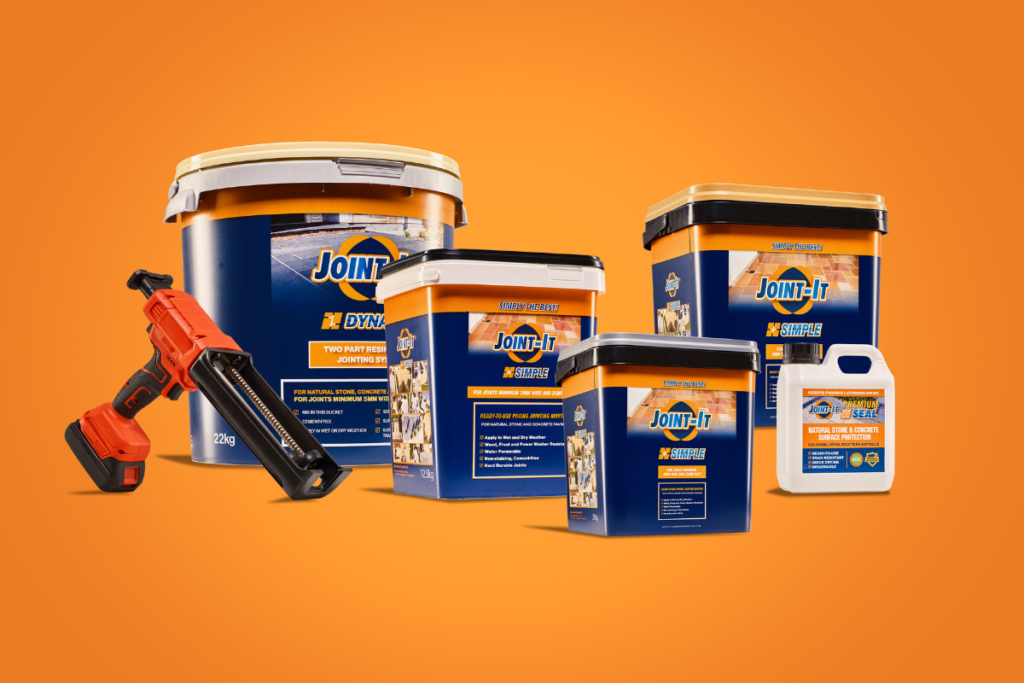
  • Joint-It Dynamic: a cutting-edge, two-part resin pointing system designed to deliver unmatched strength and flexibility for outdoor paving projects.

  • Joint-It Porcelain Epoxy Grout: Unlike traditional grouting, epoxy grout requires no rushed clean-up—simply peel it off effortlessly for a clean finish. Achieve flawless, colour-fast joints with Joint-It Porcelain Epoxy Grout, the superior choice for outdoor porcelain patios.
sand betwen pavers jointing grout - Joint-It Simple