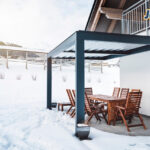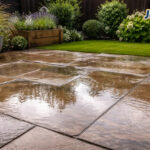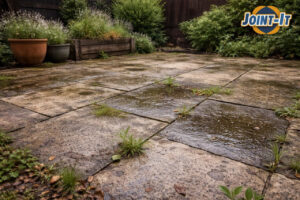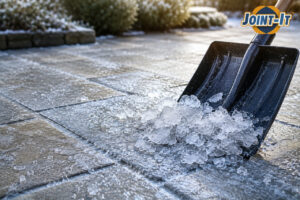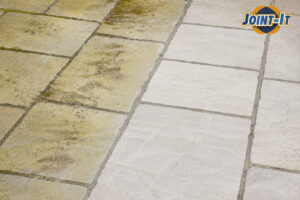

A slippy patio in winter isn’t just inconvenient, it can be dangerous. Ice, algae, frost and excess moisture all contribute to slippy patio slabs, increasing the risk of slips and falls. The good news is that with the right preparation and maintenance, you can stop your patio getting slippy in winter and keep your outdoor space safe throughout the colder months.
This guide explains why patios become slippy in winter and the most effective ways to prevent it using proven methods and trusted Joint-It products.
Why Patios Become Slippy in Winter
Winter creates the perfect conditions for slippy surfaces. Common causes include:
Ice and frost forming overnight
Algae and moss growth caused by damp, shaded conditions
Poor drainage, allowing water to pool and freeze
Smooth or sealed surfaces without enough grip
Addressing these issues early is the key to winter patio safety.
1. Remove Algae and Moss Before Winter
Algae and moss are one of the biggest causes of a slippy patio, especially during colder months. When wet or frosty, these growths become extremely slick.
Using Joint-It Algae Remover before winter helps to:
Kill algae, moss and lichen at the root
Reduce slippy surfaces caused by organic growth
Prevent regrowth during damp winter conditions
Apply in autumn or early winter to keep your patio clean and safer before frost sets in.
2. Improve Drainage to Prevent Ice Build-Up
Standing water is a major reason patios become slippy in winter. When water can’t drain properly, it freezes overnight and creates icy patches.
To improve drainage:
Clear leaves and debris regularly
Ensure joints are intact and not holding water
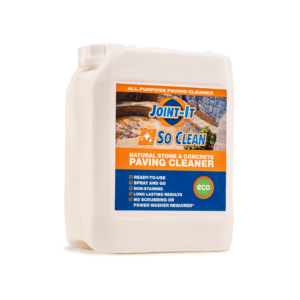
Clean surfaces using Joint-It So Clean to remove dirt that traps moisture
A well-drained patio dries faster and is far less likely to become slippy.
3. Avoid Using Rock Salt on Patio Slabs
Rock salt may melt ice quickly, but it can damage paving slabs and jointing over time. Salt penetrates porous surfaces, increasing the risk of cracking and surface erosion.
Instead of salt:
Use sand or grit to improve grip
Choose eco-friendly de-icers suitable for patios
Focus on preventing ice rather than repeatedly treating it
This helps protect your patio while reducing slippy conditions.
4. Seal Your Patio to Reduce Moisture Absorption
Unsealed paving absorbs water, which freezes and makes surfaces slippy. Applying a high-quality sealer greatly reduces this risk.
Joint-It Premium Seal helps to:
Repel water and reduce frost damage
Prevent algae growth and staining
Improve patio durability during winter
Sealing your patio in dry conditions before winter is one of the most effective ways to stop it becoming slippy.
5. Maintain Strong, Weatherproof Joints
Damaged or washed-out joints allow water to collect beneath slabs, increasing frost and ice formation.
Using Joint-It Simple ensures:
Strong, water-resistant joints
Reduced pooling and frost heave
A more stable, less slippy patio surface
Check joints annually and repair any gaps before winter weather arrives.
6. Add Extra Grip in High-Risk Areas
For patios that stay shaded or see heavy foot traffic in winter:
Use outdoor mats near entrances
Apply grit during icy conditions
Move furniture occasionally to improve airflow and drying
These small steps significantly reduce the risk of a slippy patio in winter.
Prevention is Key
To stop your patio getting slippy in winter, prevention is key. Removing algae, improving drainage, sealing surfaces and maintaining joints all play an essential role in keeping patios safe during cold weather.
By using Joint-It Algae Remover, Joint-It So Clean, Joint-It Simple, and Joint-It Premium Seal, you can protect your patio from moisture, ice and slippy conditions, ensuring a safer outdoor space all winter long.
Read more here on the “Best Ways to Remove Ice from Patio Slabs“