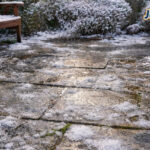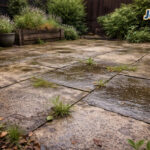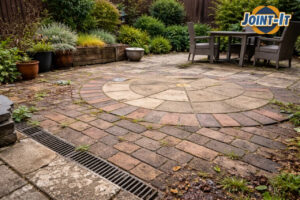

Water pooling on your patio is more than just an inconvenience. Standing water can make surfaces slippery, accelerate joint failure, encourage algae growth, and even damage the foundations beneath your paving. If you’ve noticed puddles forming after rain, it’s a sign something isn’t working as it should.
In this guide, we’ll explain how to stop water pooling on your patio and how to prevent it long term using the right preparation and jointing solutions.
Why Does Water Pool on a Patio?
Understanding the cause is the first step to fixing the problem. Common reasons include:
1. Poor Drainage
If water has nowhere to go, it will naturally sit on the surface. This often happens when patios are laid without proper drainage planning.
2. Incorrect Patio Fall (Slope)
A patio should always be laid with a slight gradient (known as a fall) to allow water to run away from the surface. If it’s too flat, or slopes towards the house, water will collect.
3. Blocked or Failed Joints
Damaged or poorly installed joints can trap water instead of allowing it to drain through the patio structure.
4. Non-Permeable Materials
Some jointing methods, such as sand and cement, are not permeable and can prevent water from draining naturally.
5. Ground Movement or Subsidence
Over time, the ground beneath a patio can shift, causing low spots where water gathers.
Why Standing Water on a Patio Is a Problem
Ignoring water pooling can lead to several issues:
Increased slip risk, especially in winter
Faster growth of moss and algae
Weakened patio joints
Frost damage and cracking
Reduced lifespan of your patio
Stopping water pooling isn’t just about appearance, it’s about safety and durability.

How to Stop Water Pooling on Your Patio
1. Improve Patio Drainage
If drainage is the main issue, you may need to:
Install drainage channels
Improve the sub-base beneath the patio
Use permeable jointing solutions that allow water to pass through
Good drainage is essential for long-term performance.
2. Check and Correct the Patio Fall
A patio should have a fall of approximately 1:60 (about 16mm per metre), directing water away from buildings.
If the fall is incorrect:
Minor issues may be solved by lifting and relaying affected slabs
Severe cases may require a full re-lay
While this is more involved, it’s often the most effective permanent fix.
3. Replace Failed or Cracked Joints
Broken joints allow water to sit where it shouldn’t, or trap it entirely.
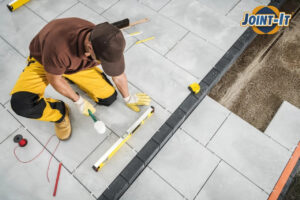
Removing old jointing and replacing it with a high-quality resin jointing compound can dramatically improve drainage and durability.
Resin jointing:
Is permeable
Resists cracking
Helps prevent standing water
Reduces weed and moss growth
4. Use Permeable Jointing Solutions
One of the simplest ways to prevent water pooling is choosing the right jointing material.
Modern resin jointing compounds allow water to drain through the joints rather than sitting on the surface, making them ideal for:
Patios
Paths
Natural stone paving
Porcelain slabs
This is a key reason many homeowners and professionals now choose resin over traditional sand and cement.
5. Fix Low Spots in the Patio
If water only pools in certain areas, you likely have low spots.
Solutions include:
Lifting and re-bedding affected slabs
Re-jointing once levels are corrected
Improving the sub-base if it has degraded
Targeting problem areas can often solve pooling without replacing the entire patio.
How to Prevent Water Pooling in the Future
Prevention is always better than repair. To avoid future issues:
Ensure correct patio fall during installation
Use permeable jointing compounds
Maintain joints and replace damaged sections early
Keep joints clear of debris
Clean algae and moss regularly
A well-installed, well-jointed patio should never hold standing water for long.
Water pooling on your patio is a clear sign that something needs attention, but the good news is that it’s often fixable without major disruption. By improving drainage, correcting levels, and choosing the right jointing solution, you can create a patio that stays dry, safe, and long-lasting.
For a permanent, low-maintenance solution, using a high-quality resin jointing compound like Joint-It Simple can make all the difference.