
When planning a paving project, one question that often arises is whether it is necessary to leave a gap between paving slabs. While it might seem tempting to place slabs tightly together for a seamless look, leaving gaps is essential for both functionality and longevity. Here’s everything you need to know about why gaps matter and how to get them right.
Why Gaps Between Paving Slabs Are Necessary
Leaving a gap between paving slabs isn’t just a design choice; it’s a practical necessity. Here’s why:
Preventing Damage from Expansion and Contraction
Paving materials expand and contract with temperature changes. Without adequate gaps, this natural movement can lead to cracking, chipping, or lifting of slabs.
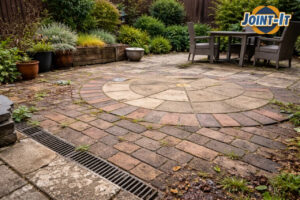
Facilitating Proper Drainage
Gaps allow rainwater to drain effectively, reducing the risk of pooling and water damage. This is especially important for outdoor areas exposed to the elements.
Improved Stability
Properly filled gaps provide structural integrity by locking the slabs in place and reducing the risk of movement over time.
Weed and Pest Resistance
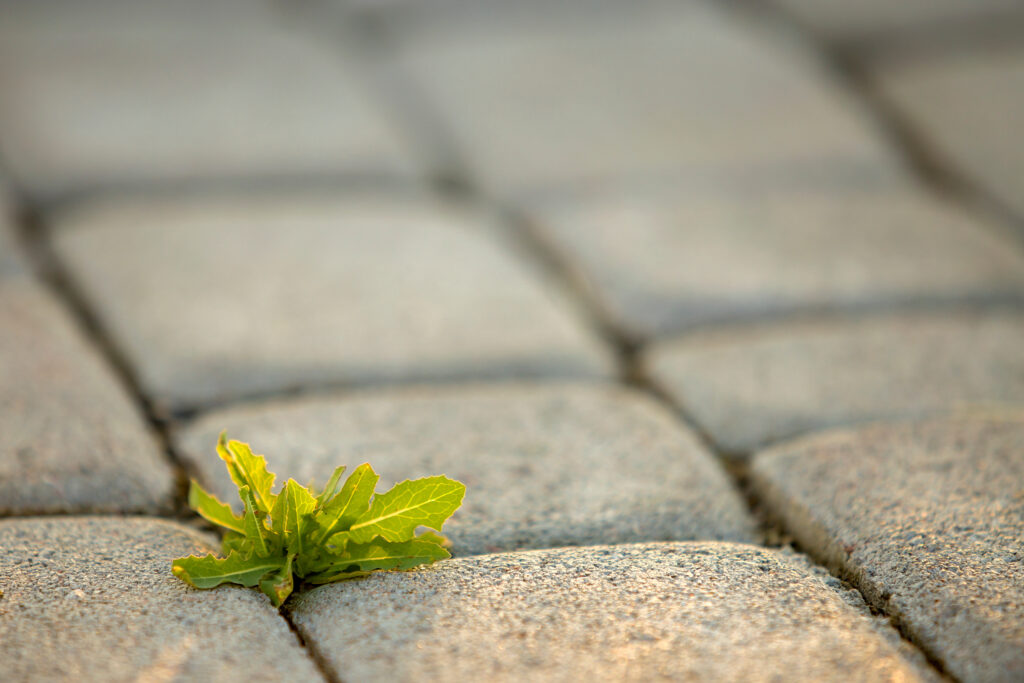
Filling gaps with a high-quality jointing material prevents weeds from growing and deters pests like ants from nesting.
Factors That Determine Gap Size
The size of the gap you leave between paving slabs depends on several factors:
Type of Slabs
- Natural Stone Slabs: Natural stone slabs (like sandstone, limestone, or slate) are often irregular in size and shape. They require slightly wider joints, typically 8-15 mm, to accommodate their uneven edges.
- Concrete Slabs: Manufactured concrete slabs are more uniform in size, so a smaller joint of 3-5 mm may be sufficient. However, if they are large format slabs, slightly wider joints might be necessary to account for movement.
- Porcelain Slabs: Porcelain paving is highly precise and usually installed with narrow joints, often between 2-5 mm.
Purpose of the Paving
Driveways: Smaller gaps (2-4 mm) ensure stability under heavy loads.
Patios and Paths: Wider gaps (4-10 mm) can enhance the design while maintaining functionality.
Jointing Material
Using a durable jointing compound, like those offered by Joint-It, can influence the gap size. Joint-It products are designed to work with specific widths for optimal performance.
Local Climate
In areas with extreme weather conditions, slightly larger gaps may be needed to accommodate more significant expansion and contraction.
How to Fill Patio Gaps Correctly
Follow these steps to ensure your paving slabs have the ideal gaps:
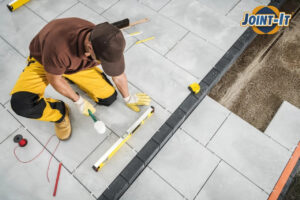
Plan Your Layout: Measure and mark the gaps to ensure consistency.
Use Spacers if Needed: For uniform gaps, use spacers between slabs during installation.
Fill the Gaps with Joint-It Compound Apply the chosen jointing material using a brush, ensuring it fills the gaps completely.
Compact and Clean: Use a rubber mallet or compactor to settle the slabs and brush away excess material.
Cure the Jointing Material: Allow the compound to set according to the manufacturer’s instructions for a long-lasting finish.
Leaving a gap between paving slabs is essential for structural stability, drainage, and long-term durability. Using high-quality jointing compounds like Joint-It products ensures these gaps are not only functional but also enhance the aesthetic appeal of your paving project. By planning carefully and using the right materials, you’ll create a surface that stands the test of time.
For more information about Joint-It products and to find the ideal jointing solution for your project, visit Joint-It’s product guide.